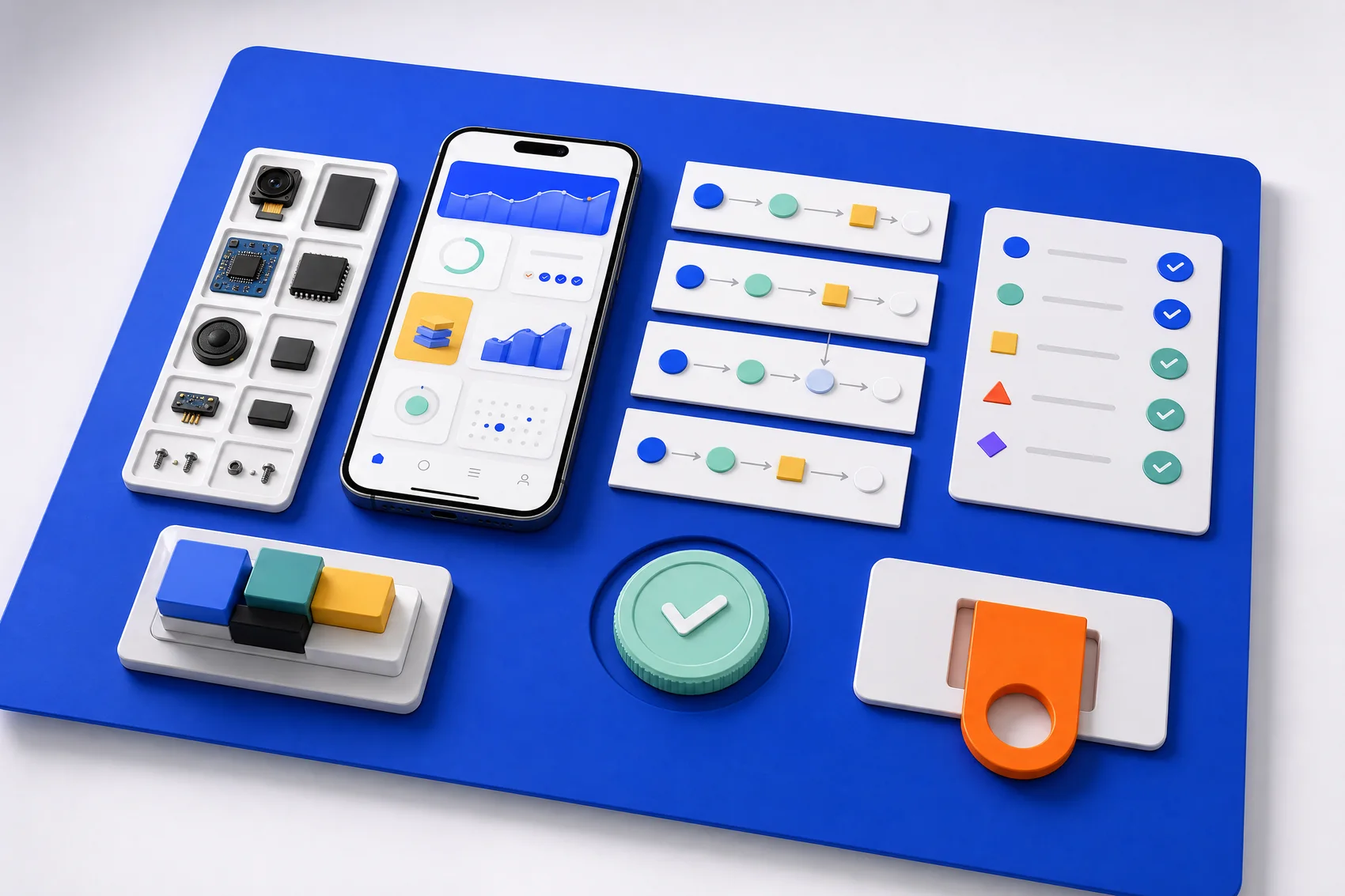
Product framing
Clarify the user, core task, constraints and smallest useful release before scope becomes a backlog.
 tufixelani
Product studioMobile / 01
We turn uncertain mobile ideas into testable flows, maintainable apps and release plans your team can actually own.
Open brief / 02
It is a chain of product decisions: who needs it, what they can complete, what must work offline, what deserves native depth and what your team can maintain after launch.
Capabilities / 03
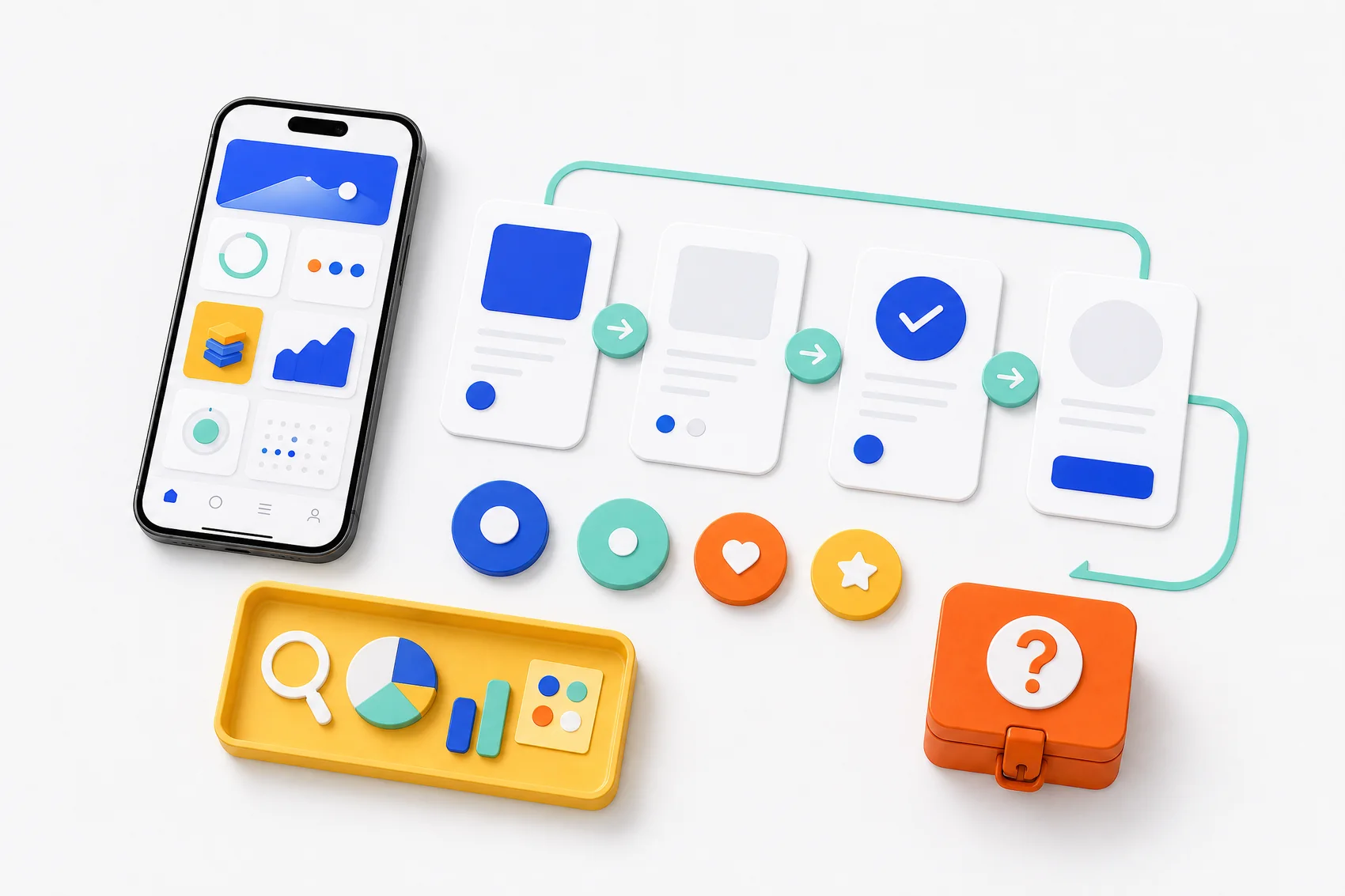
We join product framing, interface design, engineering and release work so important decisions do not disappear between disciplines.
Clarify the user, core task, constraints and smallest useful release before scope becomes a backlog.
Map navigation, states, content, gestures and accessibility into prototypes that answer real questions.
Build native or cross-platform foundations around data, device capability, resilience and maintainability.
Prepare store assets, privacy details, test coverage, monitoring and a clear operational handoff.
Build Mode / 04
The right first build depends on what must be learned, how deeply the experience uses the device and who will maintain the product.
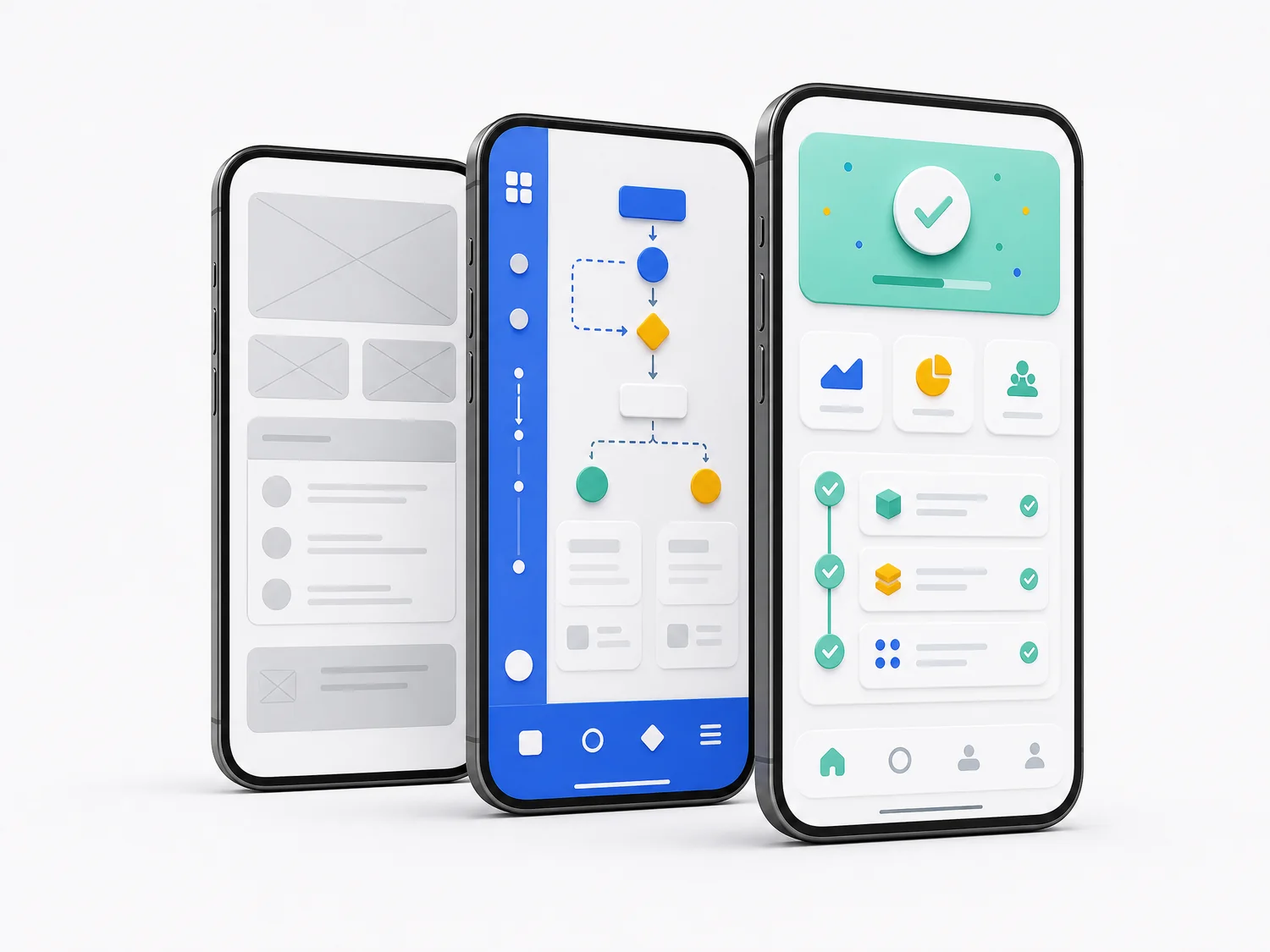
When the flow is still uncertain
Use an interactive prototype to test sequence, language, navigation and the point where a user hesitates—before production code makes those assumptions expensive.
Product flow / 05
Each phase leaves an artefact the next phase can use. Select a step to inspect its working question.
Step 01 / Frame
We identify the person, moment, repeated task and evidence that would make a first release worth using.
Resilient by design / 06
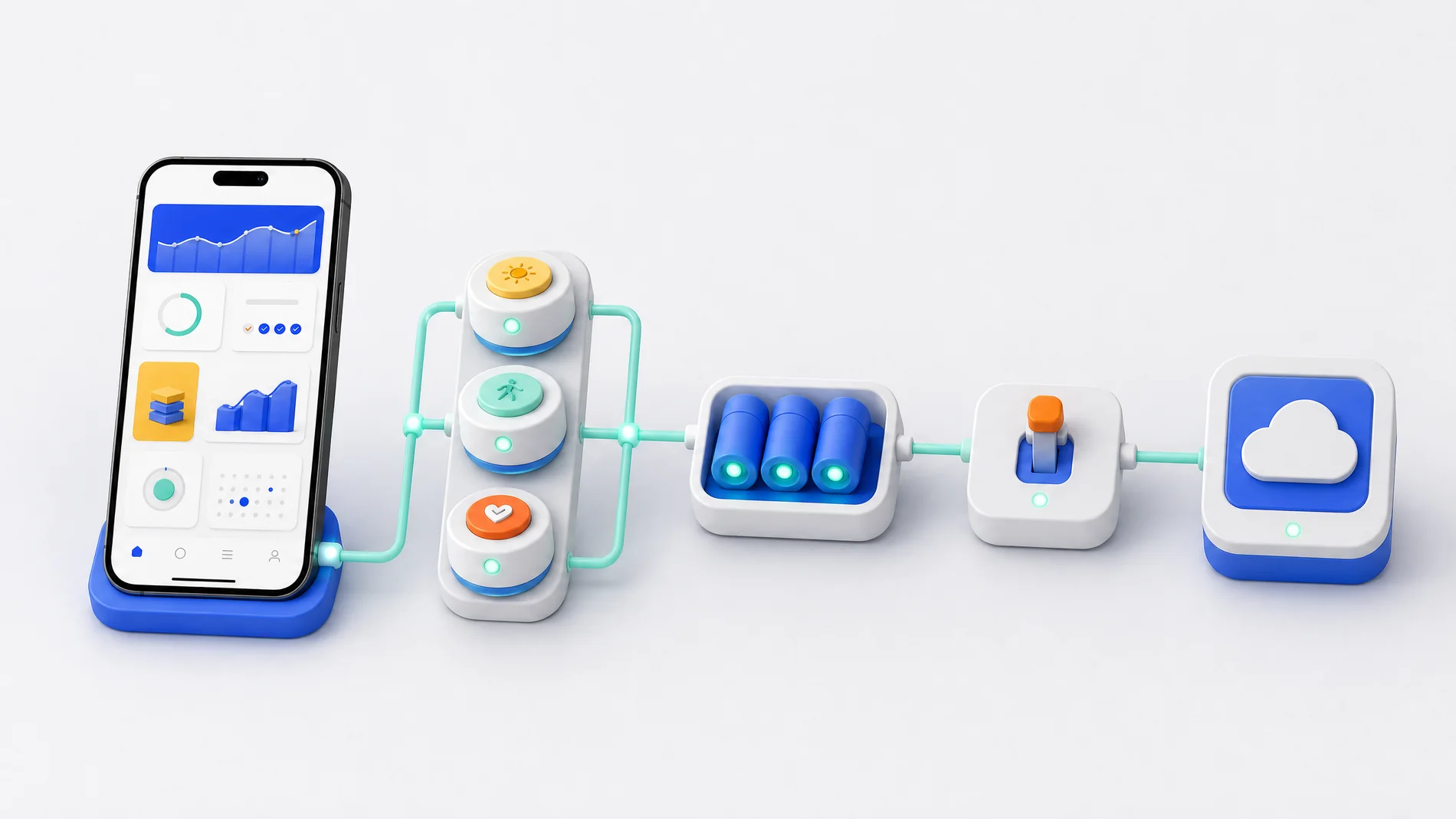
We decide what lives on the device, what can queue, how conflicts resolve and what a user sees while the network catches up.
Device Lab / 07
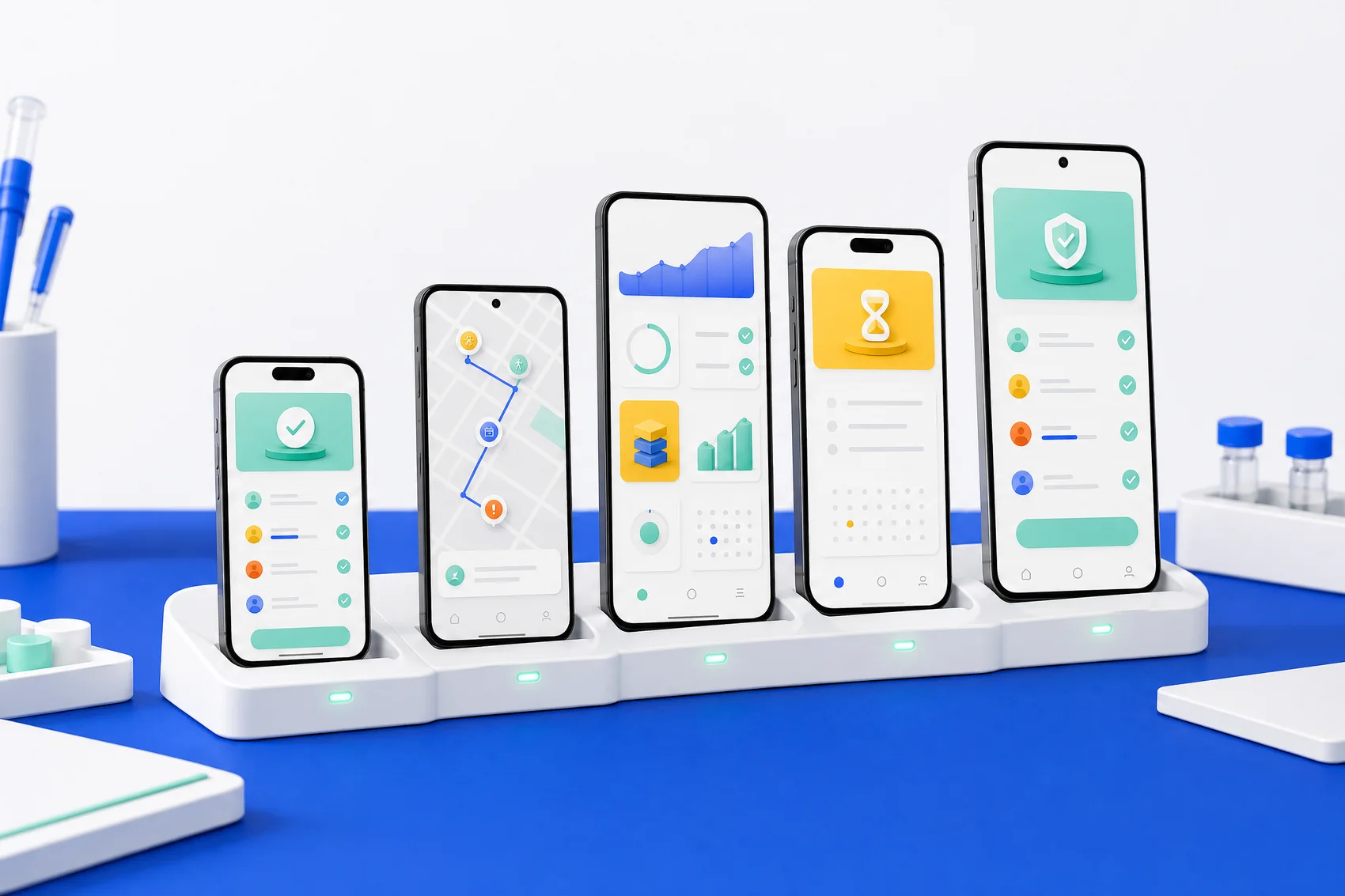
Tap targets, gestures, keyboard behaviour, focus and assistive technology.
Startup, transitions, image weight, background work and perceived speed.
Interrupted input, expired sessions, unavailable services and safe retries.
After release / 08
Store readiness matters. So do ownership, release notes, monitoring, dependency updates and a backlog grounded in what the product actually teaches.
Plan the release handoff
Questions / 09
Not automatically. Native depth is useful when the product depends heavily on platform-specific interaction, background work, media, hardware or performance. We compare that need with timeline, maintenance and team capability.
Yes. We can review the current product, map critical flows, inspect architecture and define an improvement sequence without assuming a rewrite is the answer.
The task with the most uncertainty or the greatest product consequence—not necessarily the home screen. A useful prototype should answer one decision clearly.
We can prepare release checklists, privacy inputs, screenshots, metadata structure, testing tracks and operational handoff. Platform accounts and approvals remain with the product owner.
That is the intention. We document structure, decisions, dependencies, release steps and known trade-offs so ownership can continue without hidden knowledge.
No matching question. Send the product context instead.
Compose / 10
Share the user, task, current stage and constraint that matters most. We will reply with the questions needed to frame a sensible first working session.
[email protected]